
I conduct dozens of interviews each year and used to work in a career services office coaching college students on how to land their jobs and internships. The most successful interviews are those that answer questions by telling stories using the STAR interviewing method, so let’s talk about it.
What stories can you tell about yourself and your work?
When preparing for an interview, my biggest tip is to ask yourself “What stories do I want to tell about myself and my work?” Coming up with answers to interview questions on the spot, no matter how much you prepare, is intimidating. However, telling stories is a natural part of every day life. Think instead about stories you tell your co-workers, when you call home, or that you share with friends after a tough week at work. These stories could be about the worst customer you’ve ever had, a time you changed a process for the better, something you did that received recognition, a time you supported a co-worker, etc. The important thing about these stories is that they demonstrate your skills and your work ethic.

I once conducted an interview during which the candidate shared a story about training to hike a significant mountain trail. They shared details about doing substantial research on the trail, creating an organized training plan, reviewing that plan with experienced hikers, training both solo and in group settings, overcoming doubt and challenges during the training process, beginning the hike and encountering unexpected obstacles, and finally, summiting the mountain at the end of the trail. What question do you think I asked before they shared this story?
- Tell me about your most significant achievement
- Describe a time you were challenged and how you overcame that challenge
- Describe a project you completed that required substantial research and organization
- Describe a time something unexpected occurred and how you handled it
- Tell me about a project you lead from start to finish
So, which question did you think I asked? This is why my biggest suggestion is preparing stories for interviews. This interviewees story about the mountain hike could be used to answer any of these questions and would do successfully.
Another piece that makes this example successful is that it is so unique. This is the only interview I have ever conducted where someone told me about their mountain hiking journey and that’s why it stands out in my mind years later. Am I saying you should go climb a mountain? No! But I am saying to identify unique stories or unique elements in stories that make you stand out as a candidate.
In my current job, I interview undergraduate students for on-campus jobs 1-3 times a year. For many of these students, this might be their first job or they may have some experience in food service, retail, or summer camps. So, when all of their experience is about the same, which students stand out to me in the hiring process? The ones who can tell a story about their experience that I know only they could tell. They use specifics, talk about why it was impactful to them, and are enthusiastic about the story they are telling. Even my most nervous or inexperienced interviewees shine when telling a story that was important to them.
Great! You can come up with some stories about yourself and your work, now, how do we translate that to a successful interview style? This is where we bring in the STAR method.
The STAR Method
My favorite tip for answering interview questions is to use the STAR method. This is typically used for behavioral based questions; ones that start with “Describe a time when…” or “Tell me about your experience with…” Before I tell you exactly what the STAR method includes, I am going to give you two answers to the interview question: Tell me about a time you were successful at work?
- In my previous job at Sports Store, I was selected as employee of the year for developing a new inventory management system utilizing a dynamic excel document and QR codes.
- In my previous role as Assistant Manager at Sports Store, I managed our inventory tracking and purchasing. I developed a new inventory management system utilizing a dynamic excel document and QR codes which resulted in more accurate tracking, less instances of running out of stock, and I earned the employee of the year award for my work on this project.
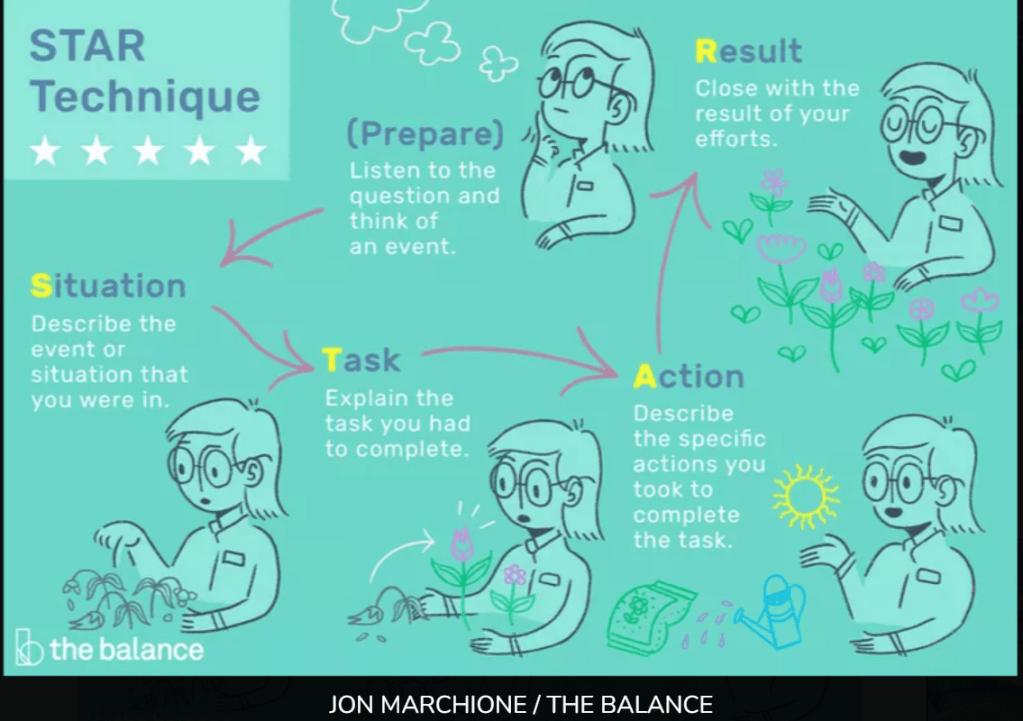
Which interview response did you like more? The second response is more successful but not just because it’s being told like a story. Specifically, it uses the STAR interviewing method which stands for situation, task, action, result.
S = Situation
What is the context needed to understand the story? – My role was assistant manager at Sports Store
T = Task
What was the job that needed to be done? – Tracking inventory and making purchases
A = Action
What action did YOU specifically take? – I created a new system
R = Result
What was the result of the action you took? – The new system improved processes and I was awarded for my work
When practicing the stories you want to tell in an interview, you want to practice them using the STAR method to ensure you don’t miss out on any important details that leave the interviewer with questions about your response. Without the situation, it can be hard for the interviewer to envision the context in which your story is relevant. Without the task, they won’t understand what needed to be done. Without the action, they won’t have insight to how you engage with your work environment or what skills you utilize in different situations, and without the result, they’ll think “Why does this matter?” Each piece is needed to tell a complete story that highlights your skills and abilities in an interview setting.
Great! But what about a negative interview question: Tell me about a mistake you made at work. What happened?
Part of my job as outreach manager is sending out mass emails to our customers to keep them informed about happenings at our business. A few months ago, when sending one of these routine emails I included information that was incorrect due to a miscommunication between myself and our marketing team. This resulted in customers feeling confused about what action they needed to take.
S = My job is outreach manager
T = Send a mass email to customers
A = I sent the email with an error
R = Customers had wrong information
In a positive interview question (i.e. Tell me about a time you were successful at work) the STAR technique would end here. Because this interview question has a negative action and a negative result, we need to identify what happened after by including an additional positive action and positive result. In other words, for an error, use a starar. (Copyright pending, ha!)
Once I noticed the error, I informed my boss, sent a follow-up email to the customers with the correct information, and coached relevant co-workers on what to do if they had any customers with concerns about the information they received. This minimized upset customers. After this mistake, I learned to always send a proof of the emails to the marketing team before sending it out to customers.
The additional A action was The additional R result was we minimized upset customers, and I learned from my mistake.
A = I informed my boss, I sent a follow-up email, and I informed my coworkers.
R = We minimized upset customers and I made changes to my process to avoid mistakes in the future.
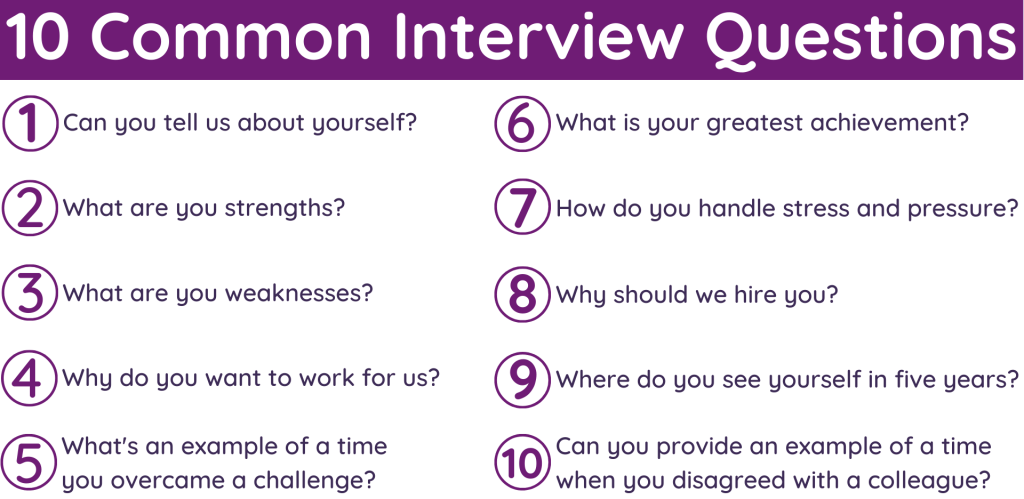
Utilizing the STAR technique to tell stories you already want to tell will make interviewing less stressful and will ensure your interview responses are more information and complete. You can find tons of other examples of the STAR method on google, youtube, and your college’s career websites. I also recommend coming up with your own STAR Stories for these common interview questions for practice.
A Note: We vs. I
One more tip I want to mention about the STAR technique is “we” vs. “I” especially during the action step. It is very common in interviews for folks to say “We developed a new process” or “We sent out an email with an error” referring to your entire team. If you were the sole or lead contributor, you should use “I.” If your whole team was involved, it is appropriate to use “we.” However, I want to add a caveat that even in “we” examples you still need to include what you personally did in the example. Without that, interviewers may be left feeling like they know a lot about your team and nothing about you, which may influence their hiring decision!
Good luck on the job search!
 Tayler Mercil